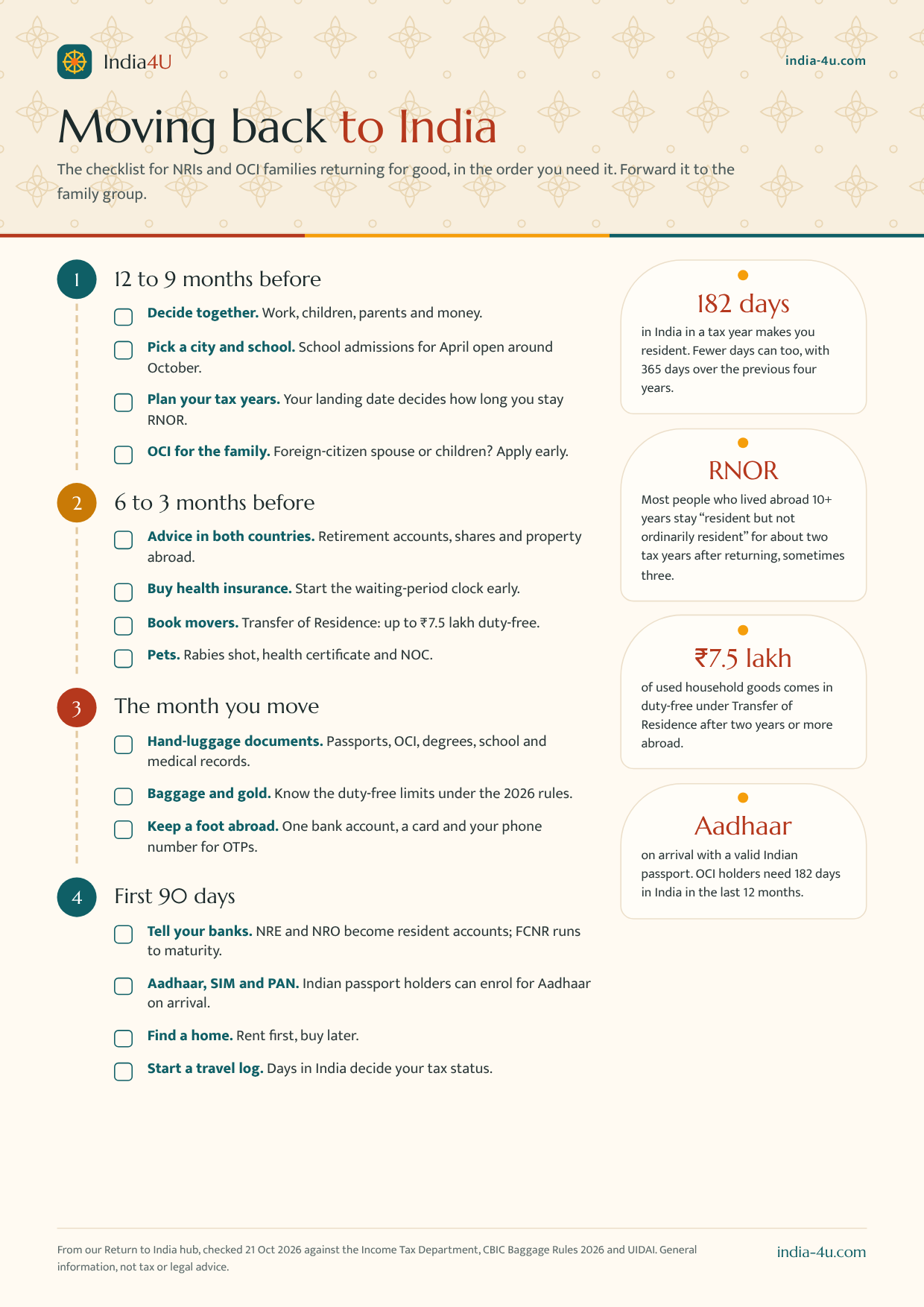
12 to 9 months before
- Decide, together. Work, children, parents and money: our should I move back? checklist covers the big questions.
- Pick a city, then a school. See where to live in India and choosing a school. Admissions for an April start open around October.
- Work out your tax years. Your arrival date decides how long you stay RNOR. Try the residential status calculator and read RNOR status.
- Foreign citizens in the family? Apply for OCI cards now; surrender old Indian passports first. See surrender and OCI.
6 to 3 months before
- Get advice in both countries on retirement accounts, shares and property abroad. RNOR years are often the time to sell or move assets.
- Health insurance: buy an Indian policy so the waiting periods start early. See health insurance.
- Pets: book the vet, rabies shot and NOC. See bringing pets to India.
- Movers: get quotes from movers who handle Transfer of Residence. Your shipment can arrive up to two months before you. See Transfer of Residence rules.
- Housing: rent first, buy later. Book a furnished flat or serviced apartment for the first month.
The month you move
- Pack documents in your hand luggage: passports, OCI cards, degrees, marriage and birth certificates, school records, medical records and vaccination cards.
- Keep one bank account and credit card abroad, and your foreign phone number on a cheap plan for OTPs.
- Check the baggage rules for gold and duty-free limits.
First 30 days in India
- Tell your banks you are now resident: NRE and NRO accounts must be redesignated, and FCNR deposits run to maturity. See bank accounts when you return.
- Aadhaar (Indian passport holders can enrol on arrival), Indian SIM, and link PAN with Aadhaar. See documents for returning NRIs.
- Clear your shipment with customs; declare it on Form CBD-II.
First 90 days
- Update your demat, mutual fund and insurance records to resident status.
- Register with a family doctor and a nearby hospital.
- Apply for an Indian driving licence.
- Start a travel log for the tax year: keep passport stamps and tickets.
Before your first tax return
Confirm your residence status (non-resident, RNOR or resident) for the year with a chartered accountant, and whether you need to report foreign assets.
This is general information, not legal, tax or financial advice. Rules change: confirm with the official source or a qualified professional.